
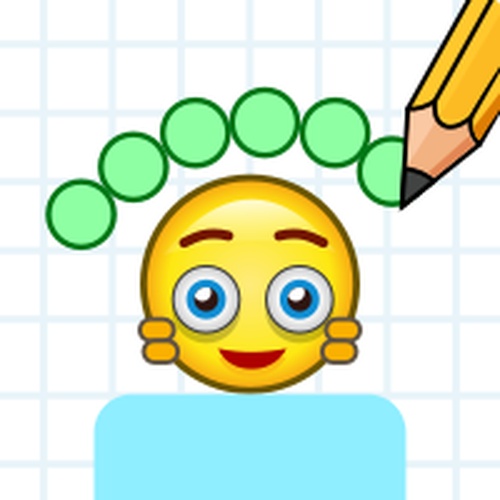
Drawing as a Defense Mechanic
In Emoji Shield Logic Puzzle, the line you draw is the only tool you get. There are no menus of power-ups or pre-built barriers—just a touch or mouse drag that creates a physical shield between a group of emojis and whatever threatens them. Because the line behaves as a solid object, its shape and placement matter more than its length. A short, well-angled stroke often works better than a long, flat one. The game gives immediate visual feedback: hazards either collide with your barrier or slip past it, so you learn the rules of each level by testing rather than reading instructions.
Level Structure and Threat Variety
Every stage introduces a fresh configuration of emojis and hazards, and the challenge comes from reading that layout before you commit to a line. Early levels place hazards on a predictable path, which lets you get comfortable with the drawing controls. Later puzzles combine multiple threats or tighter spaces, so a barrier that protects one emoji might leave another exposed. The game never rushes you; you can redraw as many times as you like until the solution feels right. That open-ended retry system keeps the focus on spatial reasoning rather than reflexes.
Who This Puzzle Is For
The family-friendly design and vibrant graphics make Emoji Shield Logic Puzzle a natural fit for parents playing alongside younger children, but the logic demands are real enough to hold an adult's attention. There is no timer pressure and no penalty for a failed attempt, which suits players who prefer to think through a problem rather than react to it. If you enjoy puzzles where the solution is something you create with your own hand rather than select from a list, this one is built around exactly that satisfaction.




Editorial Notes