
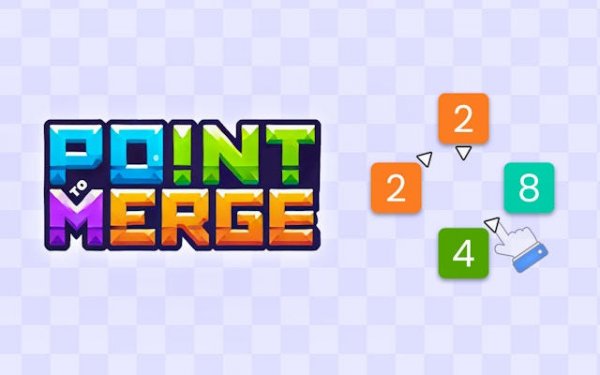
Connecting Blocks to Double Values
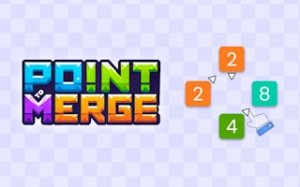
Every move in Merge Point starts with a tap. You select a numbered block, then drag a straight line to another block showing the same number. When the line connects, the two blocks combine into a single block with the next number in the doubling sequence: 2 becomes 4, 4 becomes 8, and so on. The entire board is built around this one action, so the challenge comes from where you place your merges rather than from complex controls.
Planning Without a Clock
There are no timers or move limits beyond the board itself. You can study the grid for as long as you like before drawing a line. That freedom matters because a careless arrow can send a block off the grid, which resets the level with a fresh board. The only real pressure is spatial: as blocks multiply and grow in value, open space becomes scarce, and a crowded grid leaves fewer legal connections.
Progression and Difficulty Curve
The game includes 50 progressive levels. Early boards give you room to experiment with the merging sequence, while later levels tighten the available space and demand more forward planning. The target number rises as you advance, so the same doubling mechanic stays familiar even as the puzzle becomes more demanding. Gentle visual and audio feedback confirms each successful merge without interrupting your concentration.
Who This Suits
Merge Point is designed for a wide age range, from children learning number patterns to adults wanting a low-stakes mental workout. The clean, distraction-free interface keeps attention on the grid. Because a session can last a few minutes or much longer, it fits short breaks as easily as a quiet evening. Players who enjoy 2048-style doubling and match-three logic will recognize the core loop immediately.




Editorial Notes