
The Power Rule That Drives Every Move
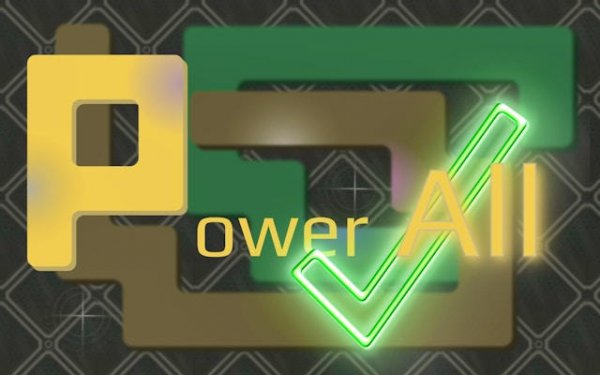
Power All: Block Puzzle Quest builds its entire challenge around one condition: a block is powered only when it holds the most cells in its connected group and sits next to at least two empty cells. That single rule turns a simple grid into a planning exercise. You are not just filling space; you are deciding which cells stay empty because those gaps act as power sources.
How a Puzzle Unfolds
Players begin with a blank or partially filled grid and place blocks by selecting an empty cell. Each placement creates or reshapes groups, and your block must end up with the majority of cells in its group. Some boards include preset blocks that also need to meet the power requirement, so you cannot ignore what is already there. Every move affects the final layout, which means visualizing the end state matters more than reacting to the current board. The game gives clear feedback after each attempt, so failed solutions teach you where your power routes broke down.
Board Variety and Preset Challenges
Boards come in different sizes and shapes, which keeps the puzzle from settling into a routine. Preset block challenges add another layer: you inherit fixed pieces and must build around them while still leaving enough empty cells for power. Because each puzzle has a single solution, deduction works better than guessing. The clean, colorful visuals keep the grid readable, and tap or click controls function on both desktop and mobile.
Who This Puzzle Suits
There is no timer, so the game rewards careful thought rather than speed. That makes it suitable for short mental breaks or longer problem-solving sessions. Players who enjoy spatial reasoning, territory-style placement, and logic puzzles without pressure will find the pace comfortable. The difficulty comes from the rules themselves, not from artificial constraints.




Editorial Notes