
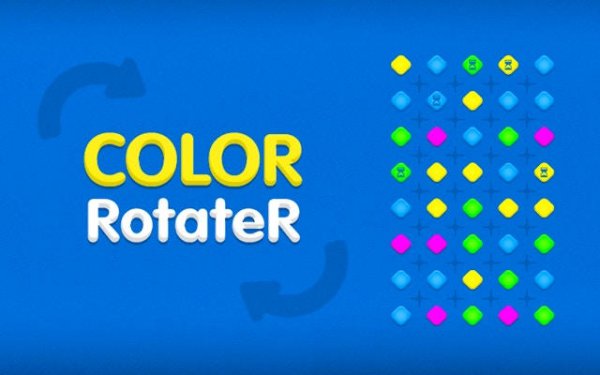
Rotate Instead of Swap
Most match-3 games ask you to swap adjacent tiles. Color Rotater Puzzle Match 3 changes that: you tap a block or a group of blocks, and each tap advances its color to the next in a predefined sequence. Your goal stays familiar—line up three or more blocks of the same color horizontally or vertically to remove them—but the path to that goal is different. Every tap is a small decision about color order, not just position.
Chain Reactions and Scoring
When a match clears, blocks above fall into the empty spaces. Those falling blocks can create new matches without any extra taps, and each chain reaction adds bonus points. This means a single well-planned rotation can clear far more than the initial three blocks. The board keeps shifting, so you are always reading the grid a few steps ahead rather than reacting to one match at a time.
Progression and Pressure
Early grids are simple and forgiving, giving you room to learn the color sequence. As you progress, the game introduces larger grids, additional block colors, and move limits. More colors mean longer sequences to track, and move limits turn each tap into a resource. The difficulty curve is gradual, so the challenge grows alongside your familiarity with the rotation system.
Controls and Accessibility
Everything runs on taps. There are no swipes, drags, or complex gestures, which makes the game easy to pick up on a phone or tablet. The visuals use bright colors and smooth animations to keep the board readable while colors shift. A global leaderboard lets you compare scores with other players, adding a light competitive layer to an otherwise relaxed puzzle experience.




Editorial Notes