
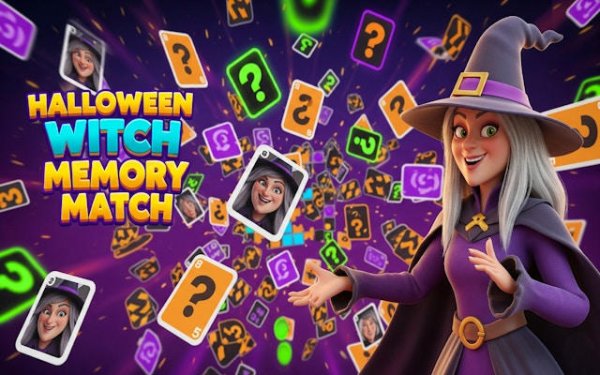
Matching Cards Against the Clock
Every round begins with a grid of face-down cards, each hiding a Halloween image. Click one card to flip it, then click a second. If the images match, the pair stays face-up and you score points. If they don't, both cards flip back after a brief pause, and the clock loses a few seconds. The objective is simple: clear every pair before time runs out. That ticking timer turns each flip into a small risk, because a wrong guess costs you both time and information.
Memory, Not Luck
Chance plays a role on the first few flips, but the game quickly becomes a test of recall. Each revealed card gives you a location to remember. The more positions you retain, the fewer wasted clicks you make. This is why the game rewards a systematic approach—working left to right or top to bottom—over random tapping. It also explains why the difficulty ramps up: later levels can introduce more cards or tighten the timer, forcing you to hold more information in your head under pressure.
Theme and Presentation
The Halloween theme is present in the card art and the overall color palette. Icons are seasonal rather than graphic, keeping the tone playful instead of frightening. That choice makes the game suitable for family play, and the point-and-click controls mean no prior gaming experience is required. The visuals support the mood without distracting from the core task of remembering where each image sits.
Progression and Replay
Progressive difficulty keeps the challenge from going stale. As levels advance, the board size or time limit changes, so the memory load grows. A score challenge adds a second layer: beyond simply finishing, you can aim to beat your personal best. Because rounds are short and the rules take seconds to learn, the game works well for quick sessions or repeated attempts.




Editorial Notes