
Core Hopping Mechanic
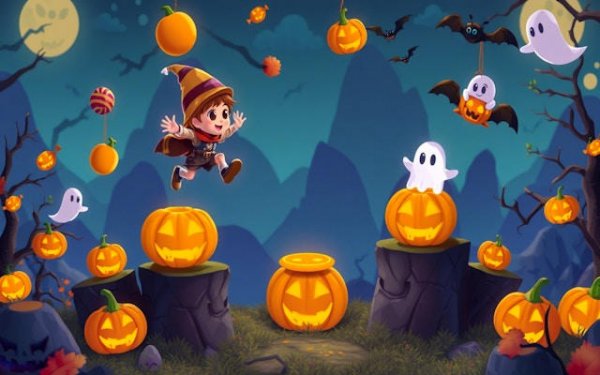
Pumpkin Hop: Halloween Adventure is built around a single input: tap the screen to make the character hop from one platform to the next. Timing is everything, because tapping too early or too late can cause a missed platform or a collision with an obstacle. The arrangement of platforms and hazards changes constantly, so no two runs follow the same pattern. That variability keeps each attempt feeling distinct and encourages repeated play to beat personal bests.
Scoring Through Collection
Distance alone does not determine your final score. Sparkling candies and glowing pumpkins are scattered across the route, and collecting them adds to your total. This creates a risk-reward decision: chasing a candy might pull you out of a safe rhythm, while ignoring collectibles limits your score. The final tally combines distance traveled with items gathered, so both careful platforming and greedy collection matter.
Hazards and Dynamic Obstacles
As you progress, the game introduces moving threats rather than static barriers. Swinging bats and rolling ghostly figures require you to read their patterns and time your hops accordingly. Slippery patches can cause the character to slide off a platform, adding a second layer of caution beyond simple timing. These hazards appear in changing combinations, so anticipating their movement becomes as important as reacting to the platforms themselves.
Accessibility and Replay Appeal
The one-tap control scheme makes Pumpkin Hop easy to pick up for players of any age, while the progressive difficulty and shifting obstacle layouts provide a reason to keep returning. Runs are short by design, which suits casual sessions. The Halloween visuals—glowing pumpkins and playful decorations—set a lighthearted tone without adding complexity to the mechanics.






Editorial Notes