
Aiming Mechanics and Ball Control
Precision Aim Arcade Challenge hands you a single glowing ball and a clear objective: strike every target in a level without letting obstacles block your path. You drag with a mouse or touch screen to set both the angle and the power of each shot, then release to send the ball flying. That two-variable control—direction and strength—forms the entire skill ceiling. There is no timer counting down and no random bounce variation, so every miss traces back to a decision you made about angle or force.
Level Structure and Rising Complexity
Early stages present straightforward target arrangements with generous spacing. As you advance, barrier placements tighten the available angles, and target clusters demand shots that curve around or thread between obstacles. Each level introduces a new configuration rather than recycling the previous layout, which keeps the planning phase meaningful. Because the game has no time pressure, you can study a layout for as long as you like before committing to a shot, and you can replay any level to refine your accuracy or test a different approach.
Visual Clarity and Cross-Platform Controls
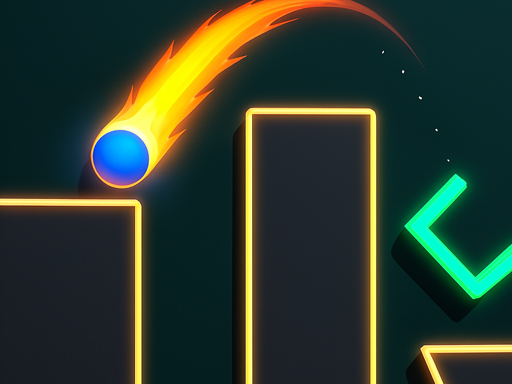
Bright, high-contrast visuals make the ball, targets, and barriers easy to distinguish at a glance. That clarity matters more than it might seem: when you are judging whether a shot will clear an obstacle, visual noise costs you accuracy. The drag-to-aim system works identically on desktop and touch devices, so the experience does not change based on where you play. [IMG_1]
Who Gets the Most From This Game
Players who enjoy geometry-driven puzzles, angle estimation, and self-paced improvement will find the loop satisfying. The absence of randomness means progress reflects growing skill rather than luck. A scoring system tracks your results and encourages replaying levels for better outcomes. If you prefer fast reflexes or narrative-driven action, the deliberate pace may feel slow—but for anyone who likes the quiet challenge of lining up a perfect shot, the design stays focused on that single pleasure.








Editorial Notes