
What the Hero Needs From You
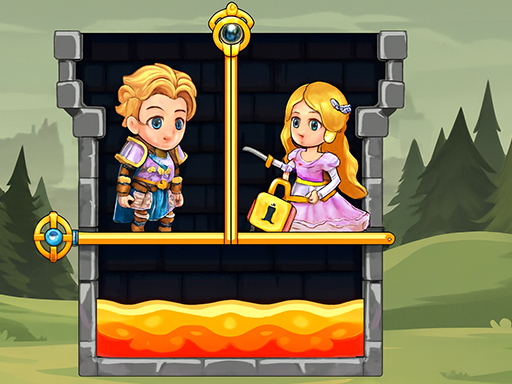
Every stage in Rescue Hero Pin Logic Puzzle starts with one character stuck behind a locked arrangement of pins. Those pins are wired to obstacles, items, and paths, and your only tool is deciding which pin to pull and when. Remove the right one and a route opens; remove the wrong one and a trap fires or a creature drops into the hero's path. The board does not reward speed, it rewards reading the whole layout before touching anything.
Why Pin Order Is Everything
The pins are not interchangeable. Some connect to hazards, some to creatures that block movement, and some to the route the hero eventually walks. Pulling a hazard pin too early can seal the escape before the hero reaches it, while releasing a creature at the wrong moment leaves it sitting on the only open path. The puzzle is essentially a sequence problem: you are looking for the one order that clears the board without trapping anyone.
Treasure, Hazards, and Creatures
Treasure sits on the board alongside the danger, and collecting it is optional but worthwhile. That creates a second decision layer, because grabbing a reward sometimes means pulling a pin you would otherwise leave alone. Environmental elements such as lava or gas can be aimed at creatures when the layout allows it, turning a threat into a tool. Not every level uses these elements, but when they appear they change which pin order is safe.
How the Challenge Grows
Early boards keep the connections simple and readable, then later levels introduce new elements that force different solutions. Difficulty comes from denser pin layouts and more interacting pieces rather than from time pressure. Progress is tracked as you advance, and levels can be replayed to chase a better result, including a full treasure collection. Because the rules stay consistent, the skills you build on one board carry into the next.



Editorial Notes