

The Rotation Mechanic
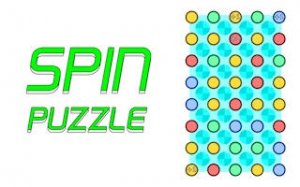
Most match-3 games ask you to swap two adjacent tiles. Spin Puzzle: Color Match 3 replaces that with a rotation action: you click or tap a cluster of dots, and the dots within that cluster shift positions. The goal stays the same—line up three or more dots of the same color—but the path to get there is different. Because a single rotation can rearrange several dots at once, you are not limited to one-for-one swaps. That opens up moves that would be impossible in a standard match-3 grid, and it means each turn carries more weight than a simple swap.
How a Turn Plays Out
A board fills with colorful dots. You scan for clusters that can be rotated to create a match. When you rotate a cluster and three or more same-colored dots align, those dots disappear and new dots fall into the empty spaces. Those falling dots can create additional matches, setting off chain reactions that clear large sections of the board. The game ends when no more moves are possible, so every rotation either builds toward a bigger play or risks leaving you stuck.
Progression and Difficulty
Levels increase in difficulty as you advance. Later stages introduce new patterns and constraints that change how you approach the board, keeping the rotation mechanic from feeling repetitive. The core objective remains clearing the board by matching colors, but the added constraints force you to plan further ahead rather than react to whatever match is closest.
Look and Feel
The game uses vibrant, colorful graphics with a clean interface. It runs in a browser on mobile phones, tablets, and desktop computers without any download or installation. Smooth animations and satisfying chain reactions give feedback as you play, and the responsive design means the board adjusts to your screen size.




Editorial Notes