
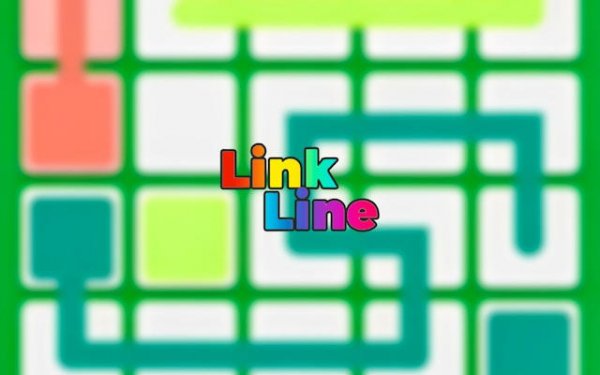
Connecting Dots with Purpose
Each puzzle presents a grid populated with colored dots. Your task is to draw a continuous line between two dots of the same color. The rules are strict: every dot must be paired, no lines may intersect, and the entire grid must be covered by line segments. These constraints turn a simple matching task into a spatial reasoning exercise where each connection influences the remaining available paths.
Grid Sizes and Growing Complexity
Early puzzles use compact 5x5 grids that establish the core rules without overwhelming you. As you advance, grids expand up to 10x10, introducing more dots and denser layouts. The larger the grid, the more possible routes exist, and the more carefully you must plan to avoid blocking future connections. Each size increase changes the puzzle's character rather than just adding length.
Controls and Error Recovery
Interaction is straightforward: tap or click to begin a line, then drag to extend it. The interface uses clear dot colors and visible grid lines to keep the board readable. An undo button reverses your last move, and a restart option resets the current puzzle. These tools let you experiment with different paths without permanent consequences, which suits the trial-and-error nature of the puzzles.
Puzzle Library and Pace
A substantial collection of puzzles is available from the start, sorted by difficulty. Regular updates add new puzzles, so returning players find fresh layouts. There are no timers or scoring systems, meaning you can work through each puzzle at your own speed. The absence of pressure makes the game suitable for short breaks or longer sessions.




Editorial Notes