
Core Puzzle Mechanics
Ball Lines Puzzle Game asks you to arrange same-colored balls into straight lines of five or more. Lines can run horizontally, vertically, or diagonally. When you complete a line, those balls vanish and you earn points. The twist: after every single move, three new balls drop onto the board at random spots. That means the board is always growing, and your window to clear space shrinks with each turn. The game ends only when no empty cells remain. There is no timer, so you can think as long as you like—but the board itself becomes the pressure.
How a Turn Unfolds
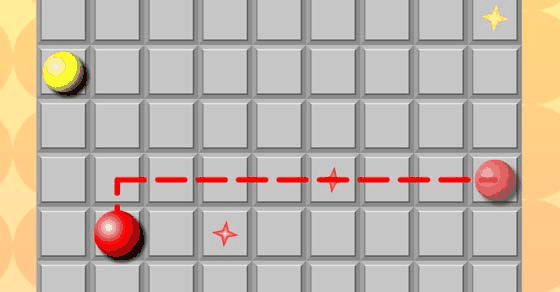
Select any ball with a click, then click an adjacent empty cell to slide it there. That is the entire control scheme. The challenge comes from deciding which ball to move and where, because you are not just building a line—you are also preparing for the three new balls that will appear afterward. A move that clears a line is great, but a move that clears a line while also opening space near the edges is better. The game rewards players who think two or three moves ahead rather than those who react to the current board.
Why the Randomness Matters
Because new balls appear in random positions, you cannot memorize a fixed solution. Each session plays out differently. That randomness also means you cannot fully control the board; you can only manage it. Skilled players learn to keep the center relatively open and avoid letting any single region become crowded. The game is less about perfect planning and more about adaptive planning—adjusting your strategy based on where the new balls land.
Who This Puzzle Suits
This is a quiet, thoughtful game. It works well for short breaks because a single turn takes seconds, but it also supports longer sessions if you want to chase a high score. The visuals are simple and colorful, and the rules take less than a minute to learn. If you enjoy logic puzzles that punish careless moves without being unfair, this one fits. If you prefer fast-paced action or games with story campaigns, it likely will not hold your attention.






Editorial Notes